





 Tribune Group GmbH Inc.
Nationally Approved PACE Program
Provider for FAGD/MAGD credit.
Approval does not imply acceptance by
any regulatory authority or AGD endorsement.
7/1/2024 - 6/30/2028.
Provider ID# 355051
Endodontic Retreatment with Bio-C Sealer Bioceramic Cement: Accelerated Recovery from Periapical Lesion
Author: Marcos Felipe de Almeida
Sponsor: Angelus
Resume
A 23-year-old female patient came to the office for evaluation, reporting severe pain in a tooth that had previously undergone endodontic treatment. A clinical examination was performed in conjunction with a periapical radiograph, which revealed an extensive periapical lesion associated with the mesial root of the lower right first molar (tooth 46), indicating failure of the previous endodontic treatment (Image 1).
After planning the case, it was decided to selectively retreat the mesial root, since the distal root showed no signs of lesion and had undergone satisfactory endodontic treatment.
Local anesthesia and absolute isolation were performed. The procedure began with coronary opening, followed by root canal debridement with rotary files and ultrasonic inserts (ClearSonic Black – helse ultrasonic) (Image 2).
After debridement, the root canal was re-instrumented and disinfected using 2.5% sodium hypochlorite and 17% EDTA, with ultrasonic activation of the irrigating solutions to enhance the antimicrobial action.
Between sessions, intracanal dressing with Bio-C Temp – Angelus was used (Image 3 (a)). After 21 days, the patient returned asymptomatic, and a new disinfection protocol with NaCl and EDTA was performed. Next, the canal was filled with gutta-percha cones associated with Bio-C Sealer bioceramic sealer cement – Angelus (Images 3 (b) and 3 (c)).
Subsequently, the final restoration was performed with composite resin.
In the radiographic follow-up after 8 months, complete bone repair of the periapical lesion was observed. The patient remains under clinical follow-up, without symptoms (Image 4).
Images
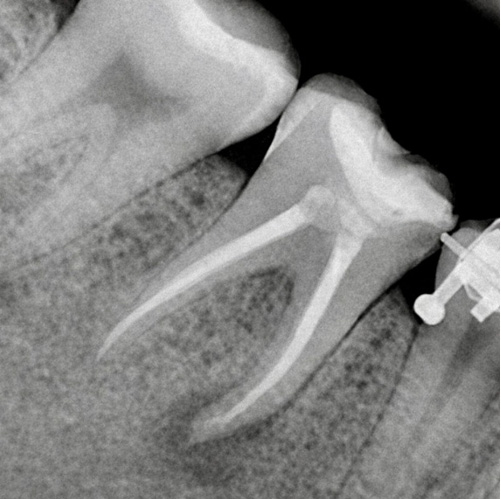
Image 1: Initial radiographic image showing injury to the mesial root
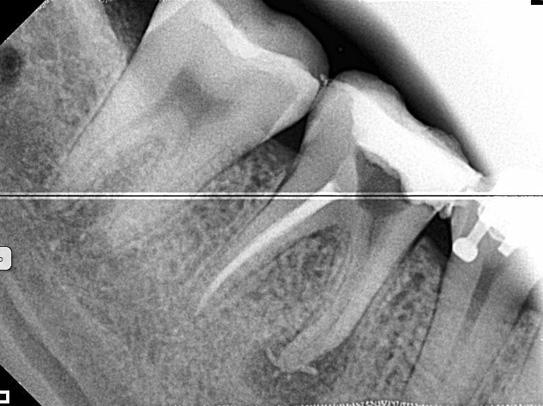
Image 2: Mesial canal after obturation removal
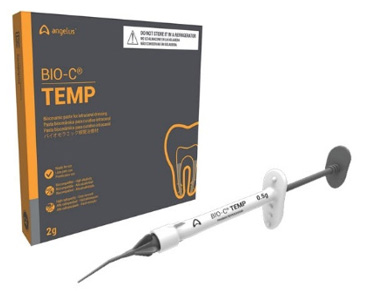
Images 3: (a) Bio-C Temp used as an intracanal dressing

Images 3: (b) Bio-C Sealer used as obturation cement
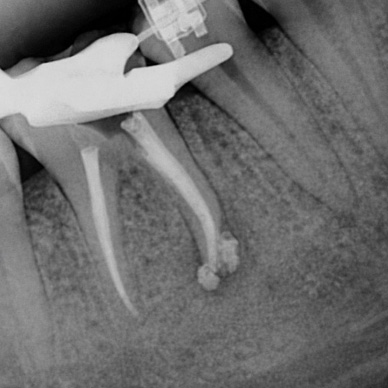
Images 3: (c) Immediate postoperative radiograph
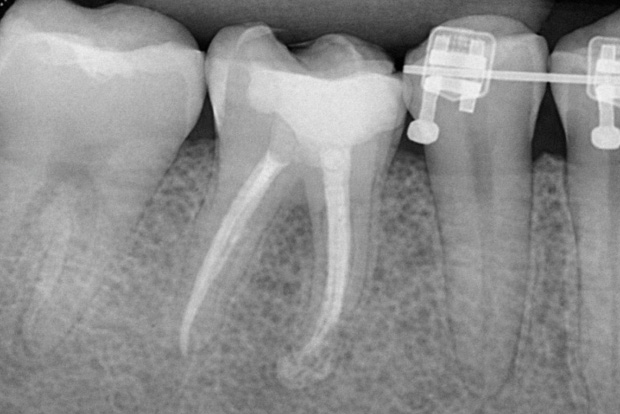
Image 4: Follow-up after 8 months